
Cervical Cancer Prevention
Current Guidance Update
Global Elimination Target
The WHO Global Strategy aims to reduce cervical cancer incidence to fewer than 4 cases per 100,000 women per year by 2030, making it a preventable public health disease.
Preferred HPV Vaccine
Gardasil 9 is the preferred HPV vaccine, with routine vaccination at 12–13 years of age adopted as national policy in many countries.
Preferred Treatment for CIN2/3
LEEP/LLETZ remains the preferred treatment for CIN2/3, providing effective removal of precancerous cervical lesions while preserving cervical function.
Management of CGIN
Cold knife conisation is recommended for cervical glandular intraepithelial neoplasia (CGIN) or when microinvasive cervical disease is suspected, allowing accurate histological assessment.
Introduction
Cervical Cancer Prevention & Management
The Cervical Cancer Prevention Pathway
- Primary prevention: HPV vaccination before sexual debut prevents up to 90% of HPV-related cervical cancers.
- Secondary prevention: Cervical screening detects precancerous changes early.
- Tertiary prevention: Timely treatment of CIN lesions prevents progression to invasive cancer.
Major Risk Factors
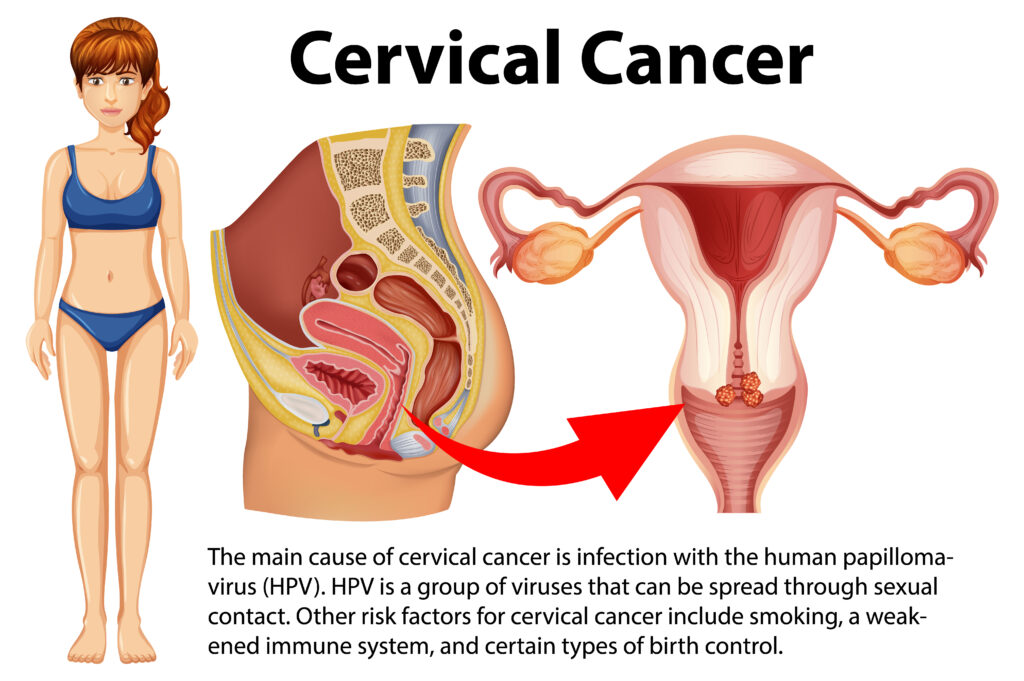
- Persistent high-risk HPV infection
- Smoking, which doubles the risk of CIN progression
- Multiple sexual partners
- Immunosuppression
- Failure to attend regular cervical screening
Recognising Symptoms
- Postcoital bleeding – the most common early symptom
- Intermenstrual or postmenopausal bleeding
- Unusual or persistent vaginal discharge
- Pelvic pain in more advanced disease
Staging & Management
- Stage IA1: Cone biopsy or simple hysterectomy
- Stage IA2–IB1: Radical hysterectomy or chemoradiotherapy
- Stage IIB and above: Concurrent chemoradiotherapy
- Fertility-sparing surgery may be appropriate for selected young women
Frequently Asked Questions
If I've been vaccinated against HPV, can I still get cervical cancer?
Vaccines protect against 70–90% of causes; continued regular screening is essential for all women.
At what age does cervical cancer screening start in Dubai?
UAE Health Authority recommendations align with international guidance for screening from age 21–25.
Conclusion
Cervical cancer is preventable. The combination of HPV vaccination and regular screening has transformed outcomes in countries with high coverage.
Sources & References
This article draws on guidance current at the time of writing from the following bodies and publications:
- WHO (2020 Global Strategy)
- RCOG (2024)
- ACOG (2020, updated 2023)
General reference bodies for women's health guidance:
RCOG
rcog.org.ukACOG
acog.orgFIGO
figo.orgWHO
who.intNICE
nice.org.uk⚠ IMPORTANT DISCLAIMER
This article is provided for general knowledge and reference purposes only. It is not a substitute for professional medical advice, diagnosis, or treatment. No medication, treatment, or change to your healthcare should be undertaken based on this content without first consulting a qualified doctor. Always seek the advice of your physician or another qualified health provider with any questions you may have regarding a medical condition.