
Ovulation Tracking
Current Guidance Update
Timing of Ovulation
Ovulation typically occurs approximately 14 days before the next menstrual period, regardless of the overall length of the menstrual cycle.
Home Ovulation Testing
Urinary LH surge testing is considered the most practical and reliable home method for identifying ovulation and the fertile window.
Optimising Conception
The highest chance of conception is achieved by having intercourse every 1–2 days throughout the fertile window rather than timing a single day.
Fertility Awareness
Tracking menstrual cycles together with ovulation predictor kits and cervical mucus changes can help accurately identify fertile days and improve pregnancy planning.
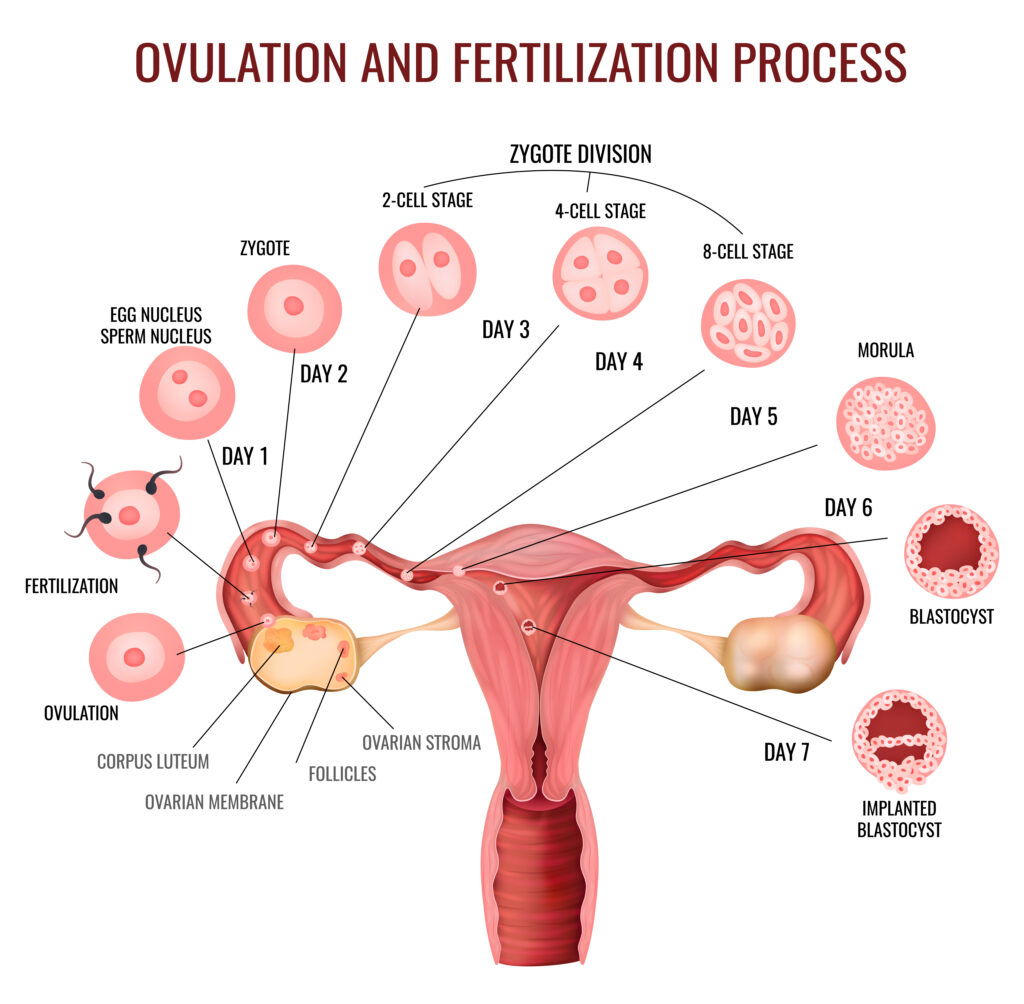
Introduction
Ovulation Tracking & Fertility Awareness
The Menstrual Cycle & Ovulation
The luteal phase is relatively fixed at approximately 12–16 days, so ovulation timing changes with cycle length. In a 28-day cycle ovulation occurs around day 14, while in a 35-day cycle it typically occurs around day 21.
Methods of Ovulation Detection
- Urinary LH tests (OPKs) detect the LH surge 24–36 hours before ovulation.
- Basal body temperature confirms ovulation retrospectively.
- Cervical mucus observation improves fertility awareness.
- Ultrasound follicle tracking is the gold standard in fertility treatment.
- LH-based wearable fertility monitors have the strongest evidence.
Optimising Pregnancy Chances
The highest probability of conception is achieved by having intercourse every 1–2 days throughout the fertile window, ensuring continuous sperm availability without the need for daily scheduling.
When OPKs May Be Unreliable
- PCOS with elevated baseline LH levels
- Perimenopause with increased FSH and LH
- Hyperprolactinaemia
- Women using clomiphene or gonadotropin medications
Frequently Asked Questions
Do I need to track ovulation to get pregnant?
Not necessarily for women with regular cycles. Tracking is most useful for irregular cycles or those wanting to optimise timing.
My temperature never rises — does this mean I'm not ovulating?
BBT charts can be unreliable. Serum midluteal progesterone is the most reliable clinical confirmation of ovulation.
Conclusion
Ovulation tracking provides valuable insight into reproductive health and supports conception optimisation. For irregular cycles, clinical assessment and formal confirmation provides the most reliable foundation for fertility planning.
Sources & References
This article draws on guidance current at the time of writing from the following bodies and publications:
- ACOG (2022)
- RCOG (2023)
- ESHRE (2022)
General reference bodies for women's health guidance:
RCOG
rcog.org.ukACOG
acog.orgFIGO
figo.orgWHO
who.intNICE
nice.org.uk⚠ IMPORTANT DISCLAIMER
This article is provided for general knowledge and reference purposes only. It is not a substitute for professional medical advice, diagnosis, or treatment. No medication, treatment, or change to your healthcare should be undertaken based on this content without first consulting a qualified doctor. Always seek the advice of your physician or another qualified health provider with any questions you may have regarding a medical condition.